Plant THIS! Not THAT!

A guide to replacing common, problematic garden cultivars with beautiful native plants that benefit wildlife and people alike!

Spring is the time when we rethink our whole existing gardens.  The more we understand how much wildlife, including our essential pollinators, struggle with traditional constrained lawn and manicured gardens full of exotic plants, the more we might be motivated to change things up a bit!


Native plants are hardier, easier to grow, and supply essential ‘ecoservices’ to life on this planet.  They have evolved to thrive under Michigan conditions and once established will be beautiful and healthy with little to no tending.


Traditional gardening is hard work.  And it is expensive.  If you are ready to make a switch to native plant gardening, here are some suggestions for a soft start.  You need not change everything up at once.  You can have a small pollinator patch, replace some of your mown lawn with native grasses or plant an ephemeral garden in that heavy shade that won’t grow turf grass.  


My best suggestion, however, is to remove some of the worst actors in terms of exotics…the ones that not only don’t support wildlife, but actually cause real harm to natural communities around you.  These plants are actually no longer legal to sell in our state.  This is a new regulation and those of us that work in wild places are very happy this is happening.  If you have these plants, don’t worry, you can easily find native plants to replace them.  Here are some examples.
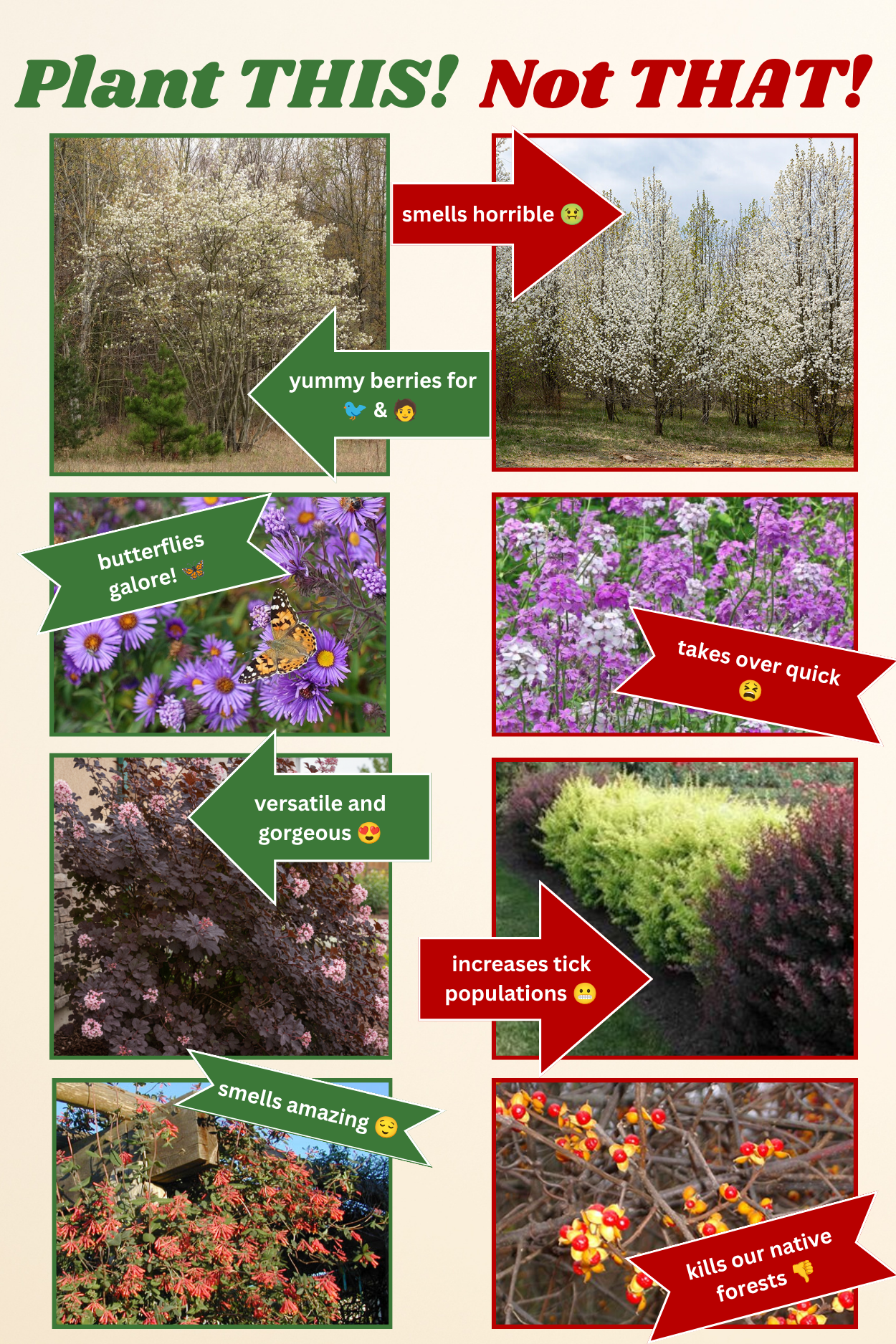
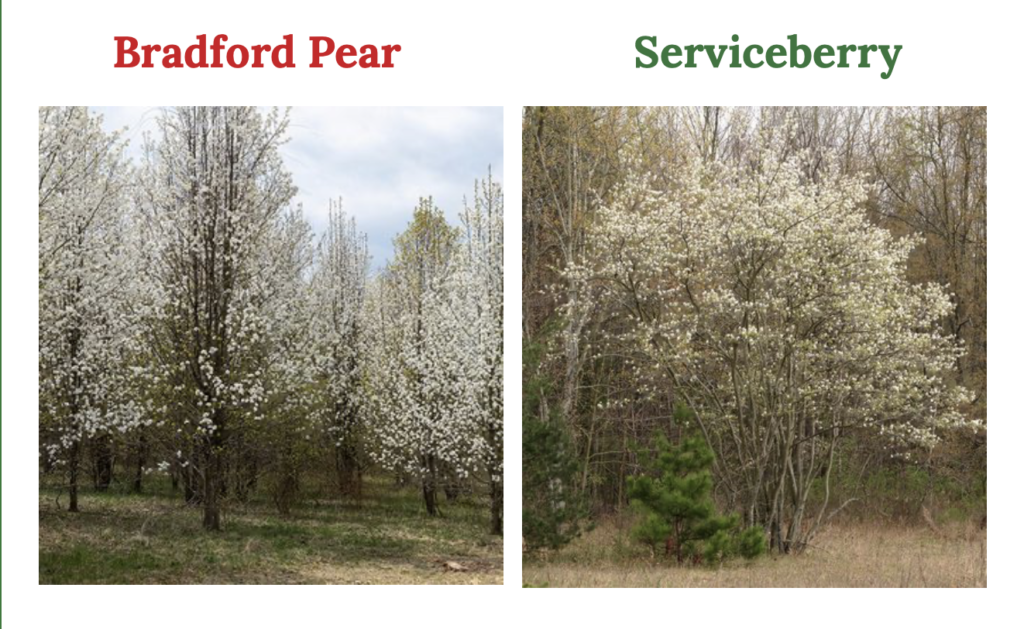
Bradford Pear (aka Callery Pear. All cultivars included) – Darling of the landscaper, this white spring blooming tree is easy to recognize along our city streets and public landscapes.  Teardrop shaped, this tree is highly invasive in the southern states and is quickly choking Michigan fallow fields and wood lots.  It offers no services to our natural communities, breaks easily, and smells like rotten fish.  It is easy to get rid of, just cut off close to the ground, and paint the stump with a woody plant killer. (Read the label, the label is the law).


Instead plant a lovely spring blooming native tree.  My favorite is Serviceberry.  There are three species native to our state: Downy Serviceberry (Amelanchier arborea), Allegany Serviceberry (Amelanchier laevis), and Running Serviceberry (Amelanchier spicata). Be sure you get a Michigan native.  It’s a workhorse and will give you years of lovely white blossoms in you yard.


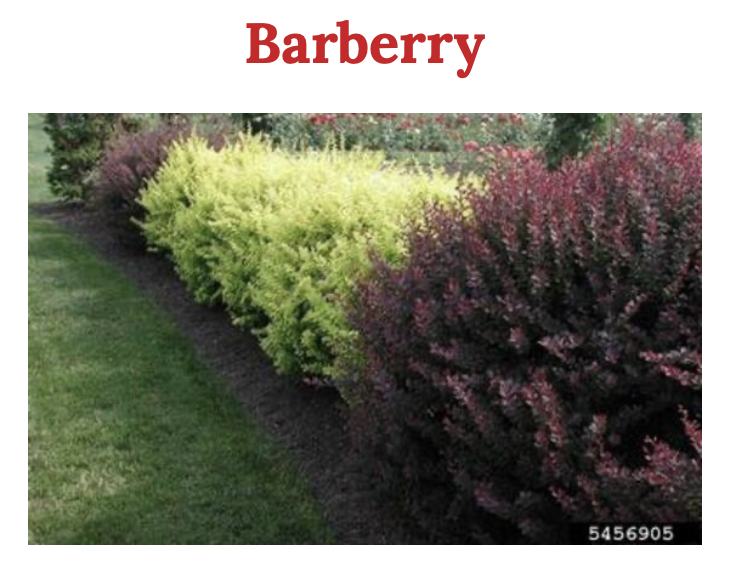
Another common landscape plant you might want to replace is barberry.  There are many cultivars of this very invasive old faithful shrub.  This particular plant not only only invades forests, it supports non native ticks that transmits diseases such as Lyme Disease and Rocky Mountain Spotted Fever.  Pull those guys out!  There are lots of lovely native shrubs to replace it.  Here are just a few.

Native Ninebark (Physocarpus opulifolius) a great shrub that tolerates lots of different soils, supports wildlife, and even turns a lovely burgundy in the fall.  Two others I can recommend are New Jersey Tea (Ceanothus americanus). It and take sun to some shade and prefers sandy soil on the dry side.  It has lovely white blooms in spring that will attract both butterflies and hummingbirds.  Or you could try Fragrant Sumac (Rhus aromatica). These have a delightful fragrance, stay low in height and don’t spread like our common Staghorn Sumac. I love their orange to maroon fall foliage and the butterflies they attract.

Dames Rocket looks lovely in the spring.  Growing along road edges and in untilled fields and forest edges its fuscia to pink blooms are so pretty.  Unfortunately, they are awful vegetative bullies that crowd out some of our prettiest native forest plant such as Wood and Michigan Lillies. Few of our garden perennials are truly problems.  It’s just that some natives in your flower garden is so helpful to allow pollinators to survive.  

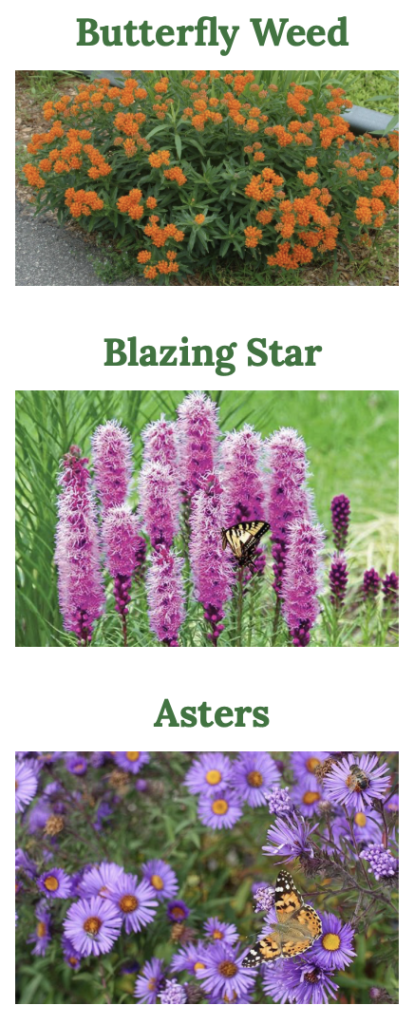
There are so many perennial native plants that are beautiful additions to your landscape plan.  If you have perennials that are no longer as pleasing as they once were, trade them out for natives. For full sun, nothing can beat Butterfly Weed (Asclepius tuberosa). With its bright orange blossoms July-September they will attract Monarchs as well as other winged wonders. Plant small plants in groups of 3 or drifts of 5.  Native plants like to be with their pals.


Many types of Blazing Star (Liatris spp.) are native to Michigan.   Their tall purple spikes will be humming with hummingbirds, butterflies and other pollinators.  Once again, plant several plants in a clump or drift for best color, and and garden bling.


Native asters (Symphyotrichum spp.) are numerous and very robust.  There are about 20 different species in Michigan.  An internet search will give you information about the different species, colors, height and spread.  Some are very assertive, some more restrained.  All are beautiful, easy to grow and very good for pollinators.

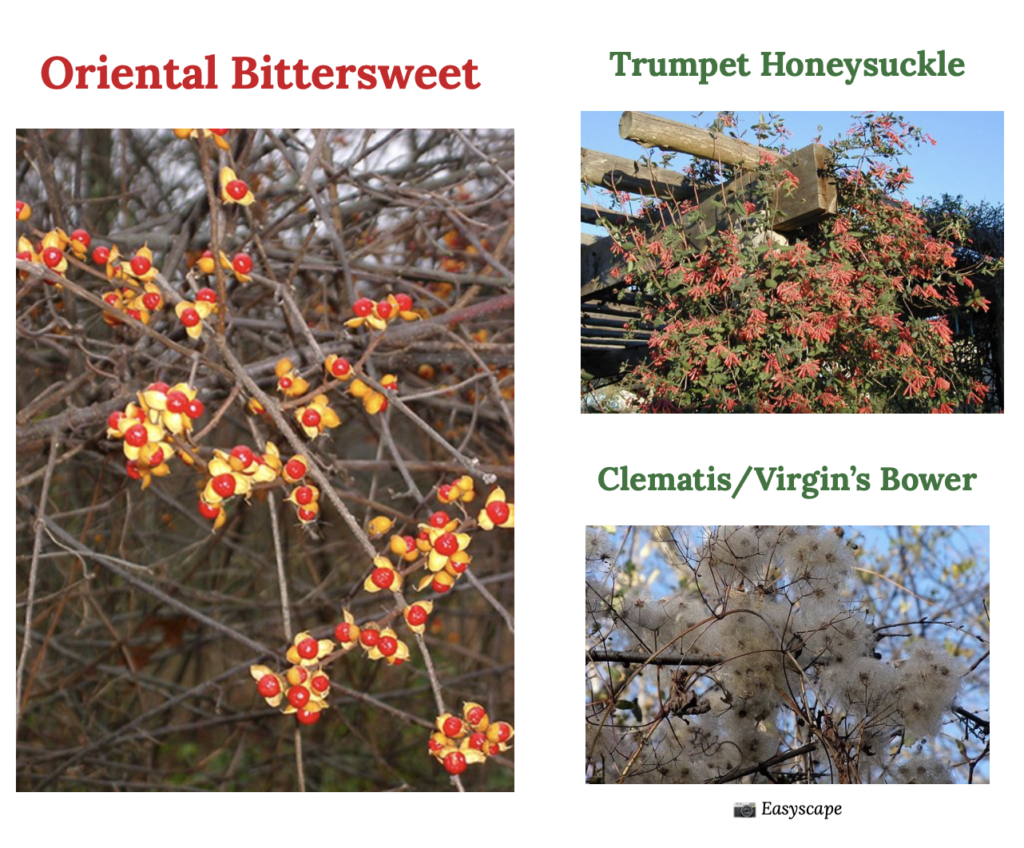
Finally, let’s look at Oriental Bittersweet.  (Celastrus orbiculatis Thunb.) This ‘Cobra of the Forest’ strangles grown trees in our state.  Yes the berries are lovely.  But birds love them and they get eaten and transported into our forested area where they kill trees.  Cutting them only stimulates root sprouts.  Please visit MIDNR Best Practices for Removal if you have Oriental Bittersweet that needs to be removed.  To replace it, or if you have a lovely trellis that needs a vine, there are two great options in Natives.  First is native Trumpet Honeysuckle (Lonivera sempervirens).  These slow growing vines have large flowers yellow to bright pink with a delightful smell.  Another is Michigan native clematis, aka Virgin’s Bower, (Clematis virginiana), grows in part shade and sun. 6-20’.  It likes damp soil and blooms July to September with clusters of creamy white fragrant flowers.  It’s a beautiful addition to any yard.  It is NOT Sweet Autumn Clematis, which is very invasive and very difficult to remove.

I hope this gives you ideas for new plants this spring.  Any addition of native plants to your landscape is a step toward a healthy stable sustainable ecosystem.

Leave a Reply

Your email address will not be published. Required fields are marked *

Get In touch

Birds eye view of green forest meeting blue lake background. White NCEC logo and font.

(231) 519-3419

Address: 490 Quarterline St, Newaygo, MI 49337

Email buzz@nc-ec.org

More Posts:

Have a Fire-Safe Summer

“But surely a few logs of my firewood from home won’t hurt anything if I take them camping with me!!! I don’t want to buy firewood when I already have a bunch!”

It’s easy to overlook the creatures we don’t see very often. But lots of little critters feed on and live in dead wood and not just rotting wood, even dry firewood! The culprits of deadly Oak Wilt, the Emerald Ash Borer, and the invasive Asian Longhorned Beetle are just some of the critters known to hitch a ride on firewood.

Read More »

Plant THIS Not THAT

Spring is the time when we rethink our whole existing gardens. The more we understand how much wildlife, including our essential pollinators, struggle with traditional constrained lawn and manicured gardens full of exotic plants, the more we might be motivated to change things up a bit!

Read More »

Planting for Pollinators: A Conversation with Sarah Pregitzer

In preparation for the upcoming growing season, we interviewed NCEC board chair and Master Naturalist Sarah Pregitzer, who has a wealth of knowledge to offer about the role of pollinators in our ecosystem as well as easy ways to get started with planting for pollinators in your yard or in the community.

Read More »