
Have a Fire-Safe Summer!

Fire is a powerful and important tool for land management, ecological restoration, and preventing forest fires. In some cases, like during prescribed burns, the presence of fire on the landscape prompts native seeds to germinate, thins dense understories, and supports natural, regenerative cycles of life and decay.


However, the risk associated with careless or haphazard fires can put our precious ecosystems at risk. As recently as 2024, Camp Newaygo experienced a devastating fire to their Wetland Trail which features an endangered sphagnum moss bog. Fires naturally occur in bogs perhaps once every couple generations, but unexpected fires caused by human interference like improper cigarette disposal or untended campfires can have serious effects for sensitive ecosystems that take decades to recover.


Here are three, positive fire practices you can follow to help make sure that fire only affects our landscapes for good!

1. Open-Debris Burning - Check Online Before You Burn

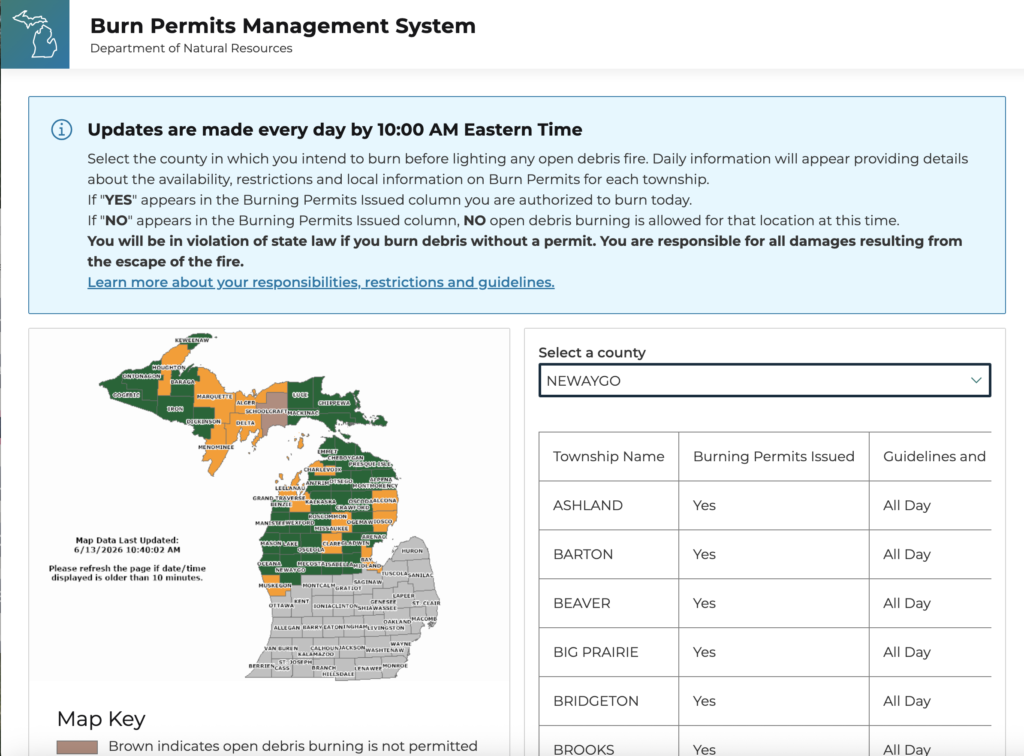
Many people practice open-debris burning especially during yard clean-up or as part of their land management. If you’re planning to burn your piles of sticks, hedge trimmings, thinned shrubs, or other large debris, make sure you check the DNR’s online Burn Permit tool first.

Once you select your county, you’ll be able to see whether you are authorized to burn open-debris in your township based on the current weather and wind conditions. If the “Burning Permits Issues” column says “Yes”, you’re good to go and can proceed burning your debris. If the column says “No”, you need to wait for another day when conditions are safer. According to the State of Michigan, 27% of wildfires are caused by the careless burning of open debris. Don’t be the cause of suffering for the wildlife you love! Take 5 minutes to check online before lighting that bonfire.

2. Don’t Move Firewood!!

It’s easy to overlook the creatures we don’t see very often. But lots of little critters  feed on and live in dead wood and not just rotting wood, even dry firewood! The culprits of deadly Oak Wilt, the Emerald Ash Borer, and the invasive Asian Longhorned Beetle are just some of the critters known to hitch a ride on firewood.


It won’t do you any good to look your wood over and check for bugs either. There could be tiny little beetle eggs, or critters that have chewed their way into the wood’s interior.

There are 3 ways to prevent the spread of invasive species when it comes to firewood:


1. Collect local firewood if collecting is allowed at your campsite.

If you’re camping on National Forest land, you can collect personal campfire wood for free without a permit. If you’re on Michigan state land, you’ll need to purchase a State Fuelwood Permit which allows you to harvest downed wood in designated state forests for extended camping or even home heating. If you’re at a private campground, check the rules. Keep in mind that campsites have heavy human traffic, and wildlife also needs dead wood to survive. If harvesting sticks and branches won’t leave any dead wood in the area, you’d be better off leaving that wood for the bugs, and buying some local firewood from a neighbor.


2. Buy local – Purchase firewood less than 10 miles from your campsite.

Neighbors who live near popular camping spots often sell firewood to campers. Buying local not only ensures that you aren’t spreading invasive species but it also keeps your money in the hands of local, hardworking folks.


3. Buy certified, heat treated firewood.

If you really want to pack up your firewood before departure, buy certified, heat treated firewood. This wood has undergone a commerical process that kills any possible insects or eggs that may have been living on or inside the wood.

3. Check for Fire Restrictions when Camping

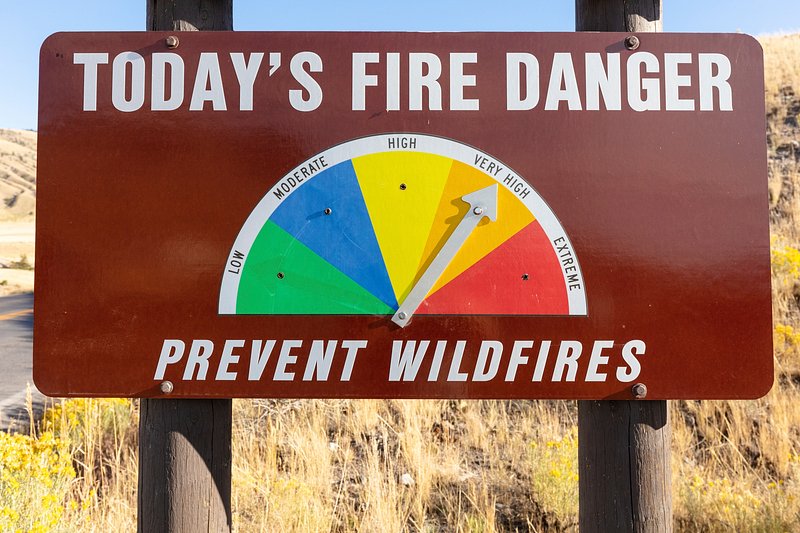
Everyone loves a campfire when camping, and it’s a bummer when there’s a burn ban in effect. However, practicing fire safety is a way to preserve our national forests and public land for years and generations to come. Whenever you go camping, keep an eye out for signs like the one below that informs visitors about the fire danger, or check conditions before you leave with this tool.

If you’ve planned a camping trip when there’s a burn ban in effect, switch to meals that can be assembled easily without cooking. Some of my favorite go-to camping meals are hummus sandwitches, quinoa salads, or what I can “peasant food” which is just a-la-carte sourdough (unsliced so you can rip off a chunk), cheese, apples, and some kind of jerky, sausage, pastrami, or cured fish. It’s easy to add dips or other produce to the mix. Shed a brief tear for the lack of s’ mores and enjoy a post-swim cheesecake. Trust me, it still hits.

Connected Resources:

Leave a Reply

Your email address will not be published. Required fields are marked *

Get In touch

Birds eye view of green forest meeting blue lake background. White NCEC logo and font.

(231) 519-3419

Address: 490 Quarterline St, Newaygo, MI 49337

Email buzz@nc-ec.org

More Posts:

Have a Fire-Safe Summer

“But surely a few logs of my firewood from home won’t hurt anything if I take them camping with me!!! I don’t want to buy firewood when I already have a bunch!”

It’s easy to overlook the creatures we don’t see very often. But lots of little critters feed on and live in dead wood and not just rotting wood, even dry firewood! The culprits of deadly Oak Wilt, the Emerald Ash Borer, and the invasive Asian Longhorned Beetle are just some of the critters known to hitch a ride on firewood.

Read More »

Plant THIS Not THAT

Spring is the time when we rethink our whole existing gardens. The more we understand how much wildlife, including our essential pollinators, struggle with traditional constrained lawn and manicured gardens full of exotic plants, the more we might be motivated to change things up a bit!

Read More »

Planting for Pollinators: A Conversation with Sarah Pregitzer

In preparation for the upcoming growing season, we interviewed NCEC board chair and Master Naturalist Sarah Pregitzer, who has a wealth of knowledge to offer about the role of pollinators in our ecosystem as well as easy ways to get started with planting for pollinators in your yard or in the community.

Read More »