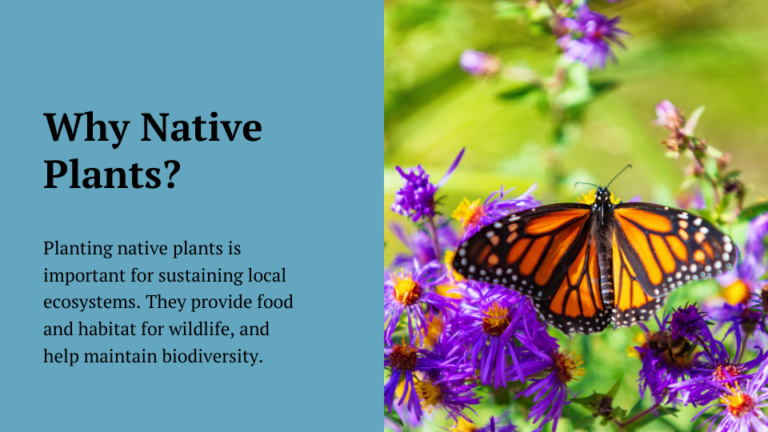
By planting native species in our yards, we can provide essential habitat, food sources, and shelter for native birds, insects, and other wildlife. The world is losing an alarming rate of habitat loss due to urbanization which negatively affects the biodiversity and health of our ecosystem.
Many look to Newaygo County as a haven for forests, fields, and natural water features. While that is very true, this beautiful environment needs to be protected from ongoing development that is endangering our native ecosystem. This is true throughout the world. We at NCEC believe that preserving and restoring native plant ecosystems has become a crucial endeavor, even more so here because we have so much to protect in Newaygo County.
Why Native Plants Are So Essential to a Healthy Newaygo County
1. Restoring Essential Habitat:
Urbanization (including our traditional grass lawns and housing developments) has led to the loss and fragmentation of natural habitats, leaving many native species struggling to survive. By planting native plants in our yards, we can provide a refuge for these species. Douglas W. Tallamy, scientist and author of emphasizes that native plants are the foundation of healthy ecosystems, as they have evolved alongside local wildlife and provide essential food and shelter. Thus, exotic plants, and even cultivars of native plants, don’t meet the needs of the tiniest yet mightiest members of our food web. Creating native plant ecosystems in our yards can help bridge the gaps in fragmented habitats and support the survival of native species.
2. Nurturing Biodiversity:
Native plants play a vital role in supporting a diverse range of wildlife. Native insects, such as butterflies and bees, rely heavily on native plants for survival. These insects, in turn, serve as pollinators for many plant species, contributing to the overall health and productivity of all ecosystems. By planting native species, we can attract a diverse array of insects, birds, and other wildlife, fostering a thriving and balanced ecosystem right in our own yards.
3. Promoting Ecological Resilience:
Native plant ecosystems are better equipped to withstand environmental challenges and adapt to changing conditions. Native plants have developed complex relationships with their surroundings over thousands of years, making them more resilient to pests, diseases, and climate fluctuations. By planting native species, we can help build resilient ecosystems that can better withstand the impacts of climate change and other ecological disturbances.
4. Reducing Environmental Impacts:
Non-native plants, often referred to as invasive species, can outcompete and displace native plants, disrupting the delicate balance of ecosystems. These invasives often require excessive water, fertilizers, and pesticides to thrive, leading to environmental degradation. By planting native species, we can reduce the need for such inputs, promoting a more sustainable and environmentally friendly approach to landscaping.
So What Can I Do?
By embracing the power of native plants and creating small-scale habitats in our yards, we can contribute to the conservation of biodiversity and the overall health of our local and global ecosystems. We can also work to create native plant havens in powerline corridors or in our public parks, and in schools and business yards. We can develop more resources for those wanting to partake in these endeavors, through connecting our Newaygo County environmental allies. We can educate more individuals to encourage more to participate. Through all of these activities, Newaygo County will become a big contributor of the overall goal of 20 million acres of native plantings in the USA as proposed by Douglas Tallamy.
Plant Natives Late Fall
So let’s get started now! Late fall is the ideal time to sow native plants for several reasons. Firstly, the cooler temperatures and increased moisture during this season create optimal conditions for seed germination and establishment. The soil is still warm enough for seeds to germinate, while the cooler air temperatures reduce the risk of heat stress on emerging seedlings. Additionally, the increased rainfall during late fall helps to keep the soil consistently moist, providing essential moisture for seedlings to develop strong root systems before the arrival of winter.
Also, late fall sowing allows native plants to take advantage of the winter dormancy period. By sowing seeds at this time, the plants have a head start in establishing their root systems before the onset of winter. This allows them to store energy and nutrients, which they can utilize for vigorous growth in the following spring. Moreover, sowing native plants in late fall also reduces competition from weeds, as most weed species are less active during this time of the year. This gives the native plants a better chance to establish and thrive without the need for excessive weed control measures. Overall, late fall sowing of native plants maximizes their chances of successful establishment and growth, leading to healthier ecosystems and increased biodiversity.
A great start to your own native landscaping would be to attend our Fall 2023 Native Plant Sale (9/23) which will have several native plant specialists on hand who can help you decide what would work best in the area you want to plant. Also, see about attending the next Newaygo County’s Native Plant Enthusiasts Meeting on Fall Sowing and Over-Winter Growing this October (specifics to be announced soon).
Please, contact NCEC if you would like to volunteer, like more information or resources, or have any ideas or resources to share. Leave a comment below or email us at buzz@nc-ec.org.
Check out the Homegrown National Park’s website to get your native plantings on the map!
Connected Resources: