The late-August chill prompted me to start thinking about fall clean-up in the garden. For many of us, tending our vegetable and flower beds, wild corners, and lawns will still be part of our rhythms in the months ahead as we prepare for winter’s rest.
Autumn is the perfect time for planting new perennials, dividing crowded clumps, and scattering seeds that need the cold season to wake them in spring. Yet as the chore list grows, so does another question: how do we balance our own labors with care for our other-than-human neighbors who share these gardens as food pantries, nurseries, and shelters?
Fireflies have become something of a poster child for those who tuck themselves into fallen leaves, but they are far from the only ones. Hummingbird moths, black swallowtail butterflies, bumblebee queens, and even assassin bugs (some of our best pest-control allies) are among the many who rely on the shelter of autumn’s leaf-fall. To them, a pile of leaves is not “yard waste,” but a shield against the long freeze.
The “leave the leaves” movement bloomed in the early 2010s, and since then, we’ve learned more about the best ways to tend our yards with pollinators in mind. Many guides suggest mowing and mulching leaves so they can enrich the soil as they decompose. While that does return nutrients to the earth, it can also destroy the carefully placed eggs and chrysalises our insect neighbors left behind in late summer.
Instead, consider gently layering whole leaves over your flower beds. They will blanket tender roots against hard freezes, feed the soil as they break down, and in spring help the ground hold its moisture while suppressing weeds. If, by then, you still prefer tidiness, you can sweep them away knowing they’ve already done much good. (For the curious, MSU Extension has a wonderful resource mapping out the life cycles of some insects who overwinter this way, even down to the degree days they need to grow and change.)
If you don’t have beds to tuck leaves into, you might try making “bug hotels.” A few small piles are best—scattered here and there like secret cottages—since one big heap can make the residents more vulnerable to mites and disease. In parts of the lawn that you don’t use for recreating, you can protect any bumbles nesting just under the soil by leaving the leaves right where they fell, and mulching any that remain with your lawnmower once they emerge in the spring.
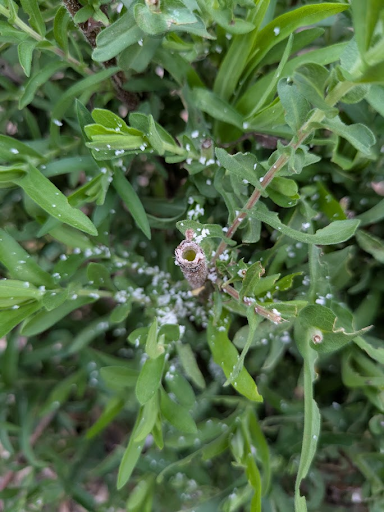
Even the hollow stems of flowers can provide the much needed protection for our pollinator friends.The stems of coneflowers, asters, and other sturdy flowers may look ragged after frost, but to a solitary bee they are potential nurseries.
A recent study from the University Extension at North Carolina State University indicated that first-year stems were rarely used for nesting, probably because they are less likely to be broken before they mature but are naturally damaged by the loss of seed heads. By the second spring, the stems left standing become prime real estate. The study saw the most residents in spring and summer, but plenty still remained in the autumn and winter. Out of 3,000 stems sampled, only about 1.5% were occupied, indicating great care taken in nesting sites, low population numbers, or both. You don’t have to forgo aesthetics entirely, as stems may be more hardy if they are trimmed to a height of 18-24” in late winter or early spring.
As we learn more about the relationships between our native plants, pollinators, birds and animals, we hone our methods and learn to be better stewards of the earth. There is still work to be done in the garden this fall, and sometimes, the kindest act is simply to wait.
If this kind of gentle gardening speaks to you, we invite you to join our next program, “Fall Native Plant Magic,” with NCEC’s Katie Clark, at the Fremont Area District Library, on Tuesday, September 30th, 2025 from 7–9 p.m. No registration is necessary. Her lecture will be followed by a seed-collecting extravaganza at the Fremont Area Community Foundation’s Prairie Restoration on October 4th. Come gather wisdom and perhaps a few seeds to plant yet this fall, or bring to NCEC’s winter seed sowing workshop!