Restoring Land for the Endangered Karner Blue Butterfly in Newaygo County

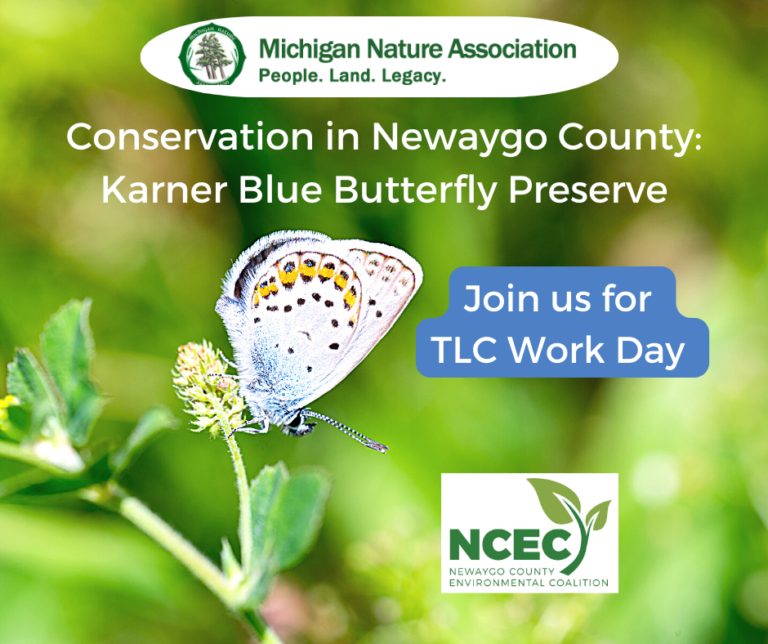
The Karner Blue Butterfly (KBB), one of Michigan’s rarest species, is facing the threat of extinction. With its survival closely tied to the presence of wild lupine, a native wildflower, the butterfly requires specific habitats like dry-sand prairies and oak-barren ecosystems. The Michigan Nature Association (MNA) has taken a significant step towards conserving this beautiful species by purchasing 40 acres of land for the Brooks Oak-Pine Barrens Nature Sanctuary located in Newaygo County, MI. This initiative is part of a KBB mitigation project aimed at restoring the butterfly’s habitat and ensuring its long-term survival.

The Importance of Habitat Restoration:
Restoring land for the KBB is crucial for its survival. With its larvae relying exclusively on wild lupine as a food source, the butterfly’s existence is intricately linked to the availability of suitable habitats. By creating and maintaining dry-sand prairies and oak-barren ecosystems, we can provide the necessary conditions for wild lupine to thrive, thus supporting the KBB population.

The Role of Newaygo County:
Newaygo County’s acquisition of the Brooks Oak-Pine Barrens Nature Sanctuary is a significant step towards protecting and restoring the KBB habitat. The high-quality habitats present in this area, coupled with the proximity to existing KBB populations, make it an excellent candidate for butterfly restoration efforts. By conserving and managing this land, Newaygo County is contributing to the overall recovery of the species.

Collaboration and Partnerships:
The restoration of land for the KBB requires collaboration and partnerships among various stakeholders. Private citizens, industry, academics, Tribes, local units of government, and state and federal agencies all play a crucial role in the recovery efforts. The Michigan Nature Association has a KBB Preserve in Newaygo County that has an active colony of butterflies, but it needs a lot of restoration work (especially a prescribed burn): 2501 E 72nd St, East of Spruce Ave., Newaygo County, MI 49337.   By working together, we can pool resources, share expertise, and implement effective conservation strategies.

Best Practices for Habitat Restoration:
To ensure the success of habitat restoration, it is essential to follow best practices. These may include:

1. Conducting regular habitat management and restoration activities, such as prescribed burns and invasive species control, to maintain open areas and limit the encroachment of woody vegetation.
2. Creating connecting corridors of wild lupine and nectar plants to facilitate the movement of KBBs to new areas.
3. Monitoring and researching the impacts of climate change on the butterfly and its habitat, and implementing adaptive management strategies accordingly.
4. Engaging local communities and raising awareness about the importance of conserving the KBBs and its habitat.

Looking Towards the Future:
Restoring land for the KBB is not only crucial for the survival of this endangered species but also sets a precedent for the conservation of other at-risk plants and animals. The comprehensive review of climate change impacts on the KBB, along with the proposed recovery actions outlined in the upcoming report, provide hope for species recovery in a changing climate.

By restoring land and creating suitable habitats for the KBB, we can ensure the survival of this rare and beautiful species. Newaygo County’s efforts in acquiring the Brooks Oak-Pine Barrens Nature Sanctuary are a significant step towards this goal. However, the restoration of land requires collective action and collaboration. Let us join hands and work together to protect the KBB and preserve the natural beauty of Newaygo County for future generations.


Connected Resources:

2-3 Days a week, the MNA West Michigan Supervisor and two interns are working at the KBB Preserve. You are ALWAYS welcome. Just contact Stuart Goldman, Conservation Coordinator from the Michigan Nature Association, will lead the workday. He can be contacted at 517-643-6864; email - sgoldman@michigannature.org.

Leave a Reply

Your email address will not be published. Required fields are marked *

Get In touch

Birds eye view of green forest meeting blue lake background. White NCEC logo and font.

(231) 519-3419

Address: 490 Quarterline St, Newaygo, MI 49337

Email buzz@nc-ec.org

More Posts:

Returned and Restored

A cloud of road dust blanketed the car behind me from my excited acceleration as I passed the Newaygo Prairie Nature Sanctuary. Ignition time was in less than an hour. This was my very first burn.

Read More »

April is Vernal Pools Month in Newaygo County!

“Vernal Pools are like our Coral Reefs of the Forest,” states Katie, Vice Chair and Program Manager of the Newaygo County Environmental Coalition (NCEC). “They are small, important wetlands that appear in spring and dry up during the fall.  They are ideal breeding grounds for a variety of amphibians and invertebrates that would be vulnerable to lake or stream fish; the fairy shrimp, wood frogs, spotted and blue-spotted salamanders can only breed in Vernal pools. They even travel back to their birth Vernal pool to spawn.”

Read More »

Whose Earth is it Anyway?

As humans, it makes sense that we often think of the Earth from our own point of view. We imagine it as a place with trees and meadows and houses and highways. We think of cities as places for people, roads as ways to get from one place to another. But this is only our experience, and there are about a billion others.

Read More »