Returned and Restored

A cloud of road dust blanketed the car behind me from my excited acceleration as I passed the Newaygo Prairie Nature Sanctuary. Ignition time was in less than an hour.  This was my very first burn.


Conservation work has been a lingering build for myself and like a backing fire, my growth was against the wind and current of my life. A backing fire is the name of the first fire you create. You walk and ignite the end of the property where the movement of the fire is against the wind, it’s a slow burn. I began with volunteering. Originally I used volunteering to meet new people and find some purpose. I then moved into some more label heavy roles on boards with requests for my knowledge. Through this I was exposed to many new subjects, skills and trades I’d never heard of before. Because of this I was able to find in myself just how much I enjoyed the concept of prescribed burns. A ritualistic medicine for the land once performed by the original peoples. Prescribed fires are used today to manage woody encroachment and unwanted species while also aiding with fire dependent plant germination. New growth is encouraged and a clearing of the forest floors is an additional boon. 


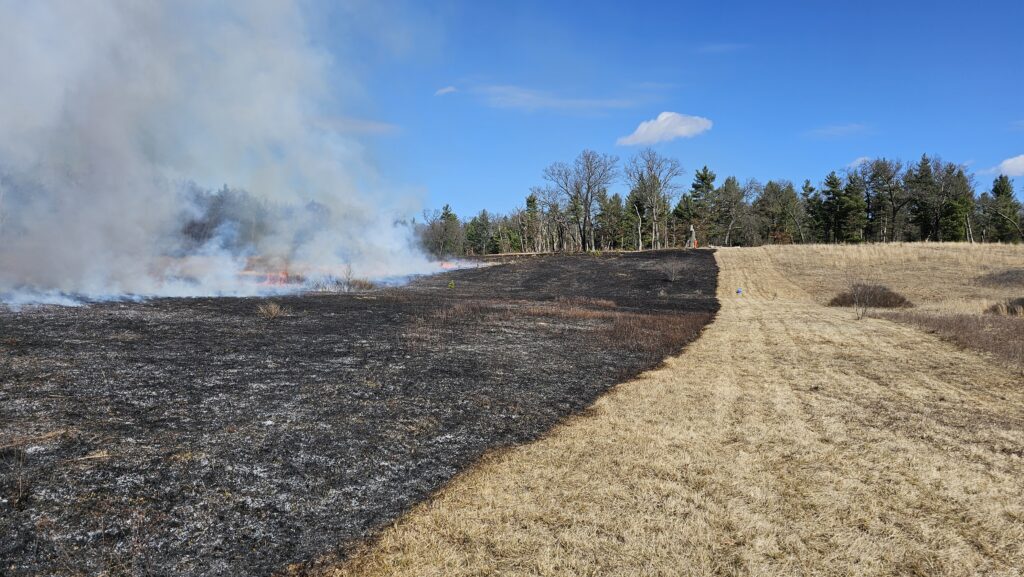
I attended a burn informational event put on by the Newaygo County Environmental Coalition and led by Michigan Nature Association staff. This is where my own flanking fire began. Flanking fires run parallel to the wind, steadily burning the boundary along the sides of a property, if in a perfect situation the parcel to be burned was a square that is. I started building black in my own mental prairie with people, opportunities and knowledge. The “black” by the way, is the area that’s already been burned and it’s a safe place to be. There is no fuel in the black, as it’s already been consumed by a fire passing over it. 

I continued to make progress in my education, attending the Michigan Conservation Stewards program in Newaygo. Through this I was introduced to Newaygo Prairie Nature Sanctuary. I got to know this place by volunteering with the Michigan Nature Association. I removed things like pricklyash and honeysuckle, cleared debris, burned brush piles and learned to love the area I was working in. I felt like I was giving back. As I worked I saw the potential for a prescribed burn growing and my chances of actually working on the property during the burn increase. A chance for me to watch a cycle begin again and know that this fire dependent system is healthier because of this restoration effort specifically.


Finally, I got the text I’d been hoping for, “If the snow melts, we’re a go for burning on Wednesday at Newaygo Prairie”, followed by a phone call asking if I would be in attendance. A head fire is the closing fire that moves the fastest and burns with the wind, using it to accelerate and move the fire inward until it extinguishes. Now the head fire of excitement was lit in my mind. I packed my Nomex pants and shirt, 8” high leather boots, leather gloves, water, and my gut as I instantly became aware that my ignorance and novice experience was a risk to everyone around me. I trusted the leaders in the group and I had the knowledge but it’s different when it’s right in front of you. 

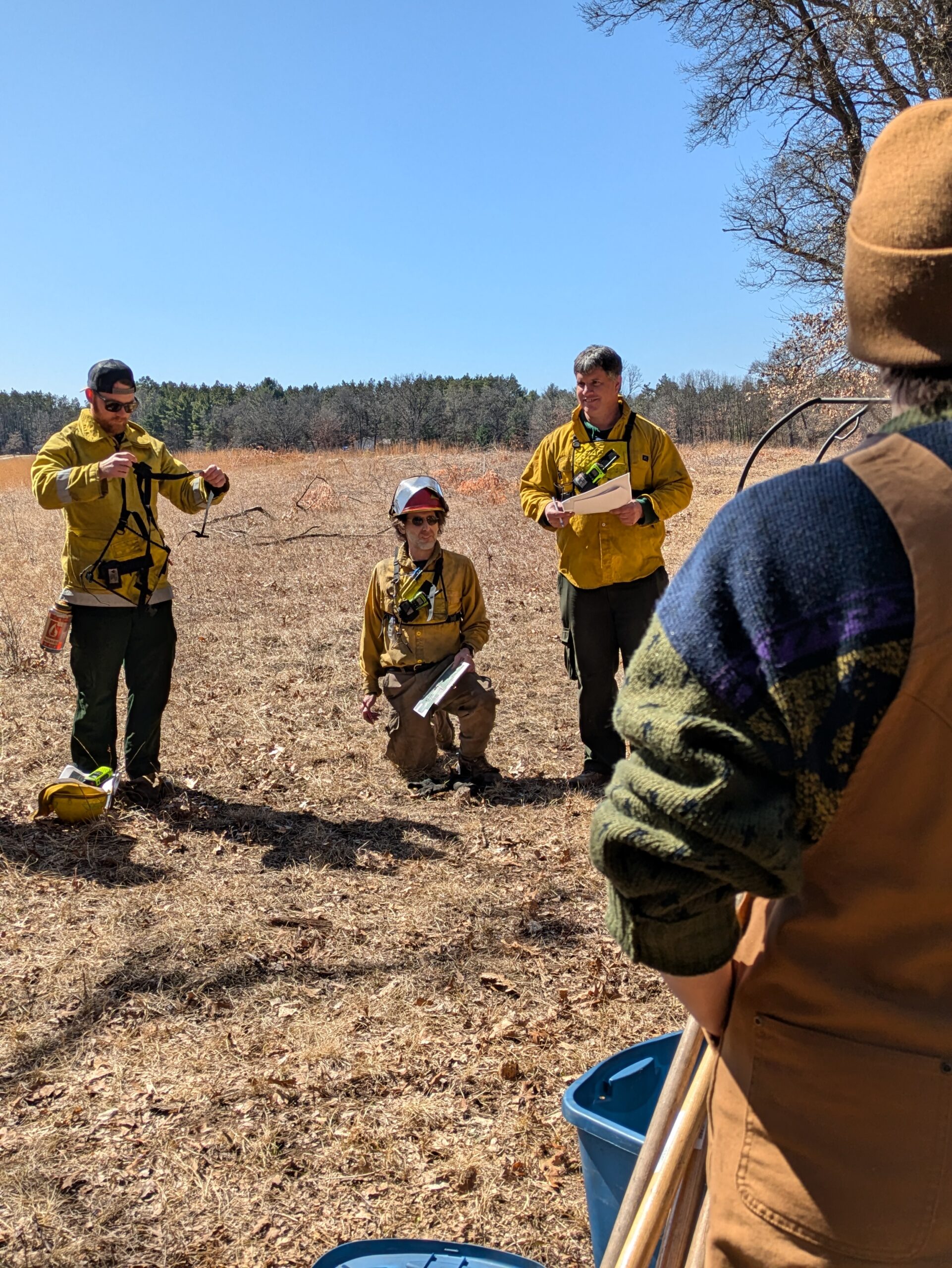
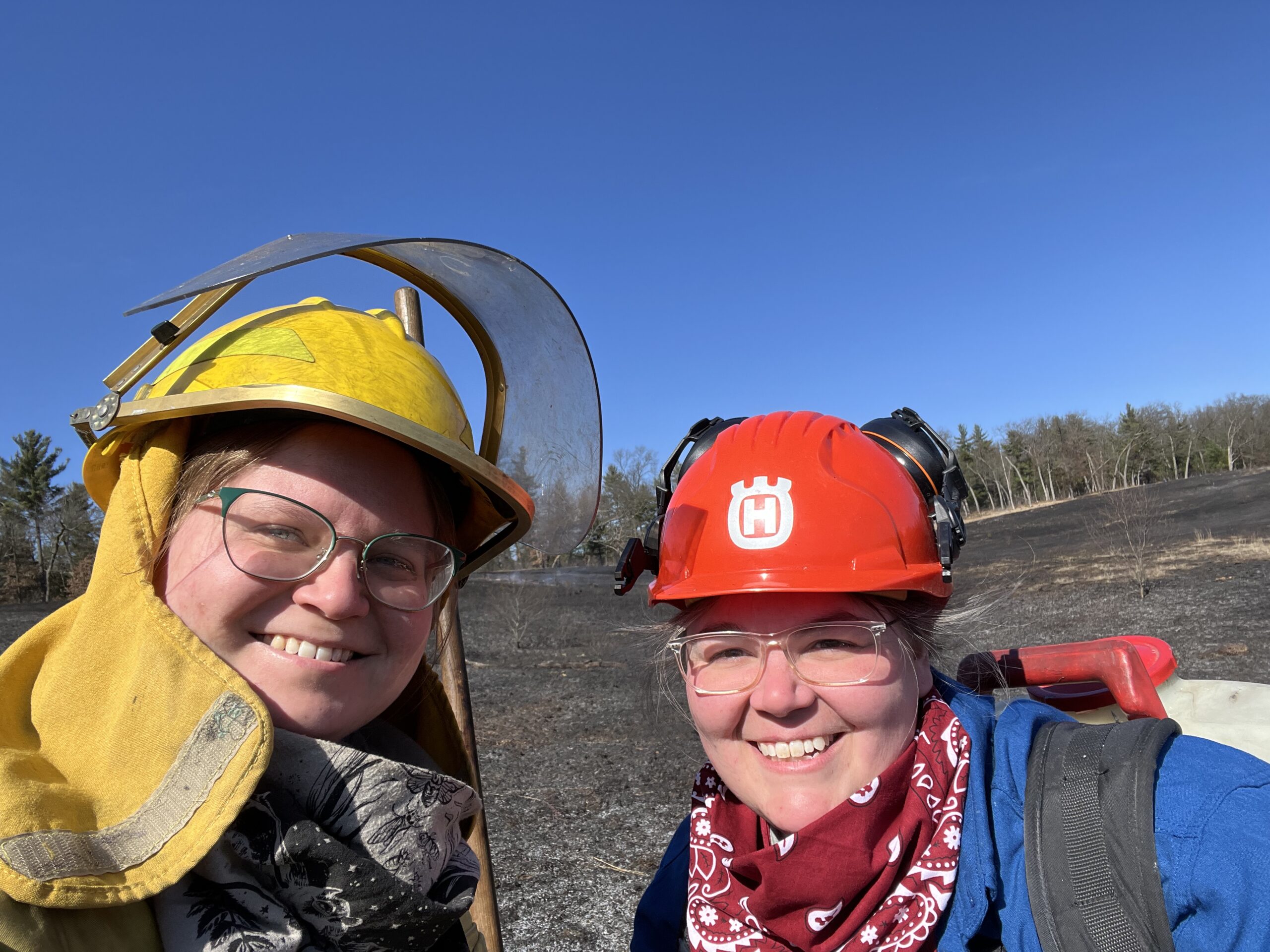
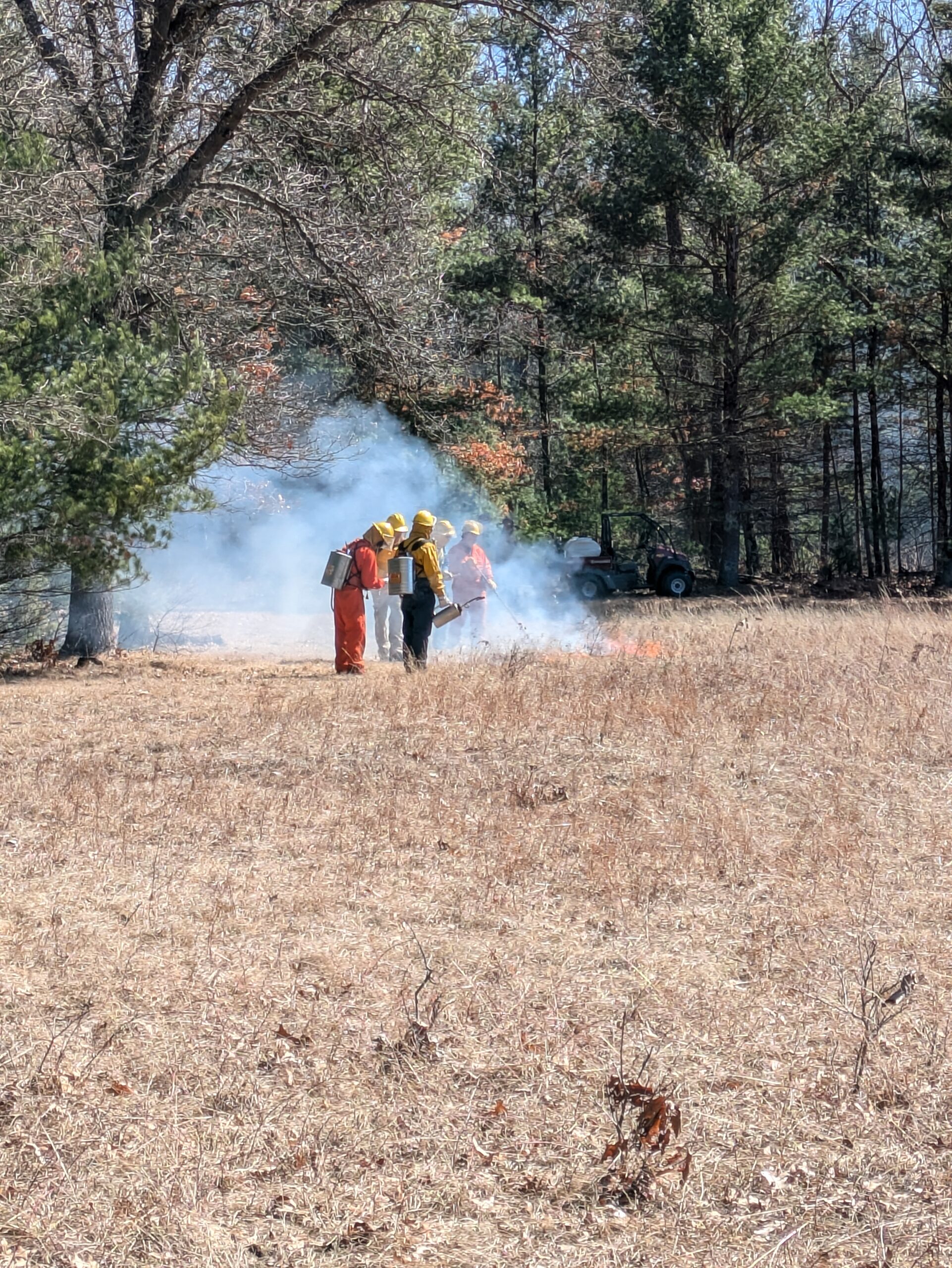
I pulled up to the burn site, we were instructed to park a ways away and walk in. That walk down the dirt road was long and I tried to calm my nerves as I approached the team. The oak trees towered over me and it felt as if they were watching me. I had my bright yellow Nomex pants on over my cotton trousers and an electric blue button up. My clothes were new which was a stark contrast to the group image I was walking in on and what I looked like after the burn was completed as the bright yellow was dulled by soot. Brief hellos and introductions with big smiles and serious demeanors were my greeting. I watched in awe and excitement as the lived experiences and stories poured from the people around me while the equipment was unloaded and the team suited up. It was surreal and there was closure being here amongst the plants that were depending on an active ignition. 


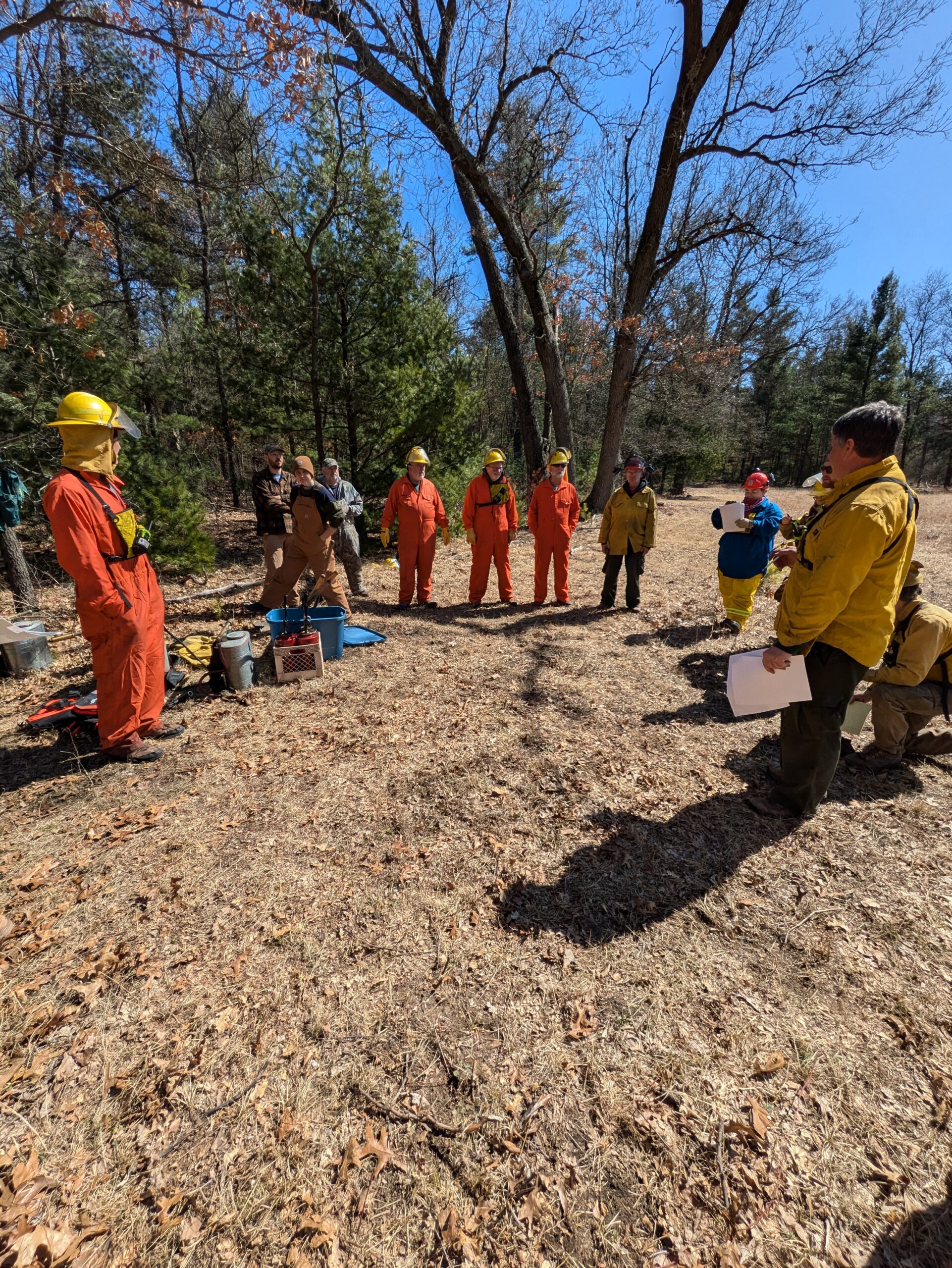
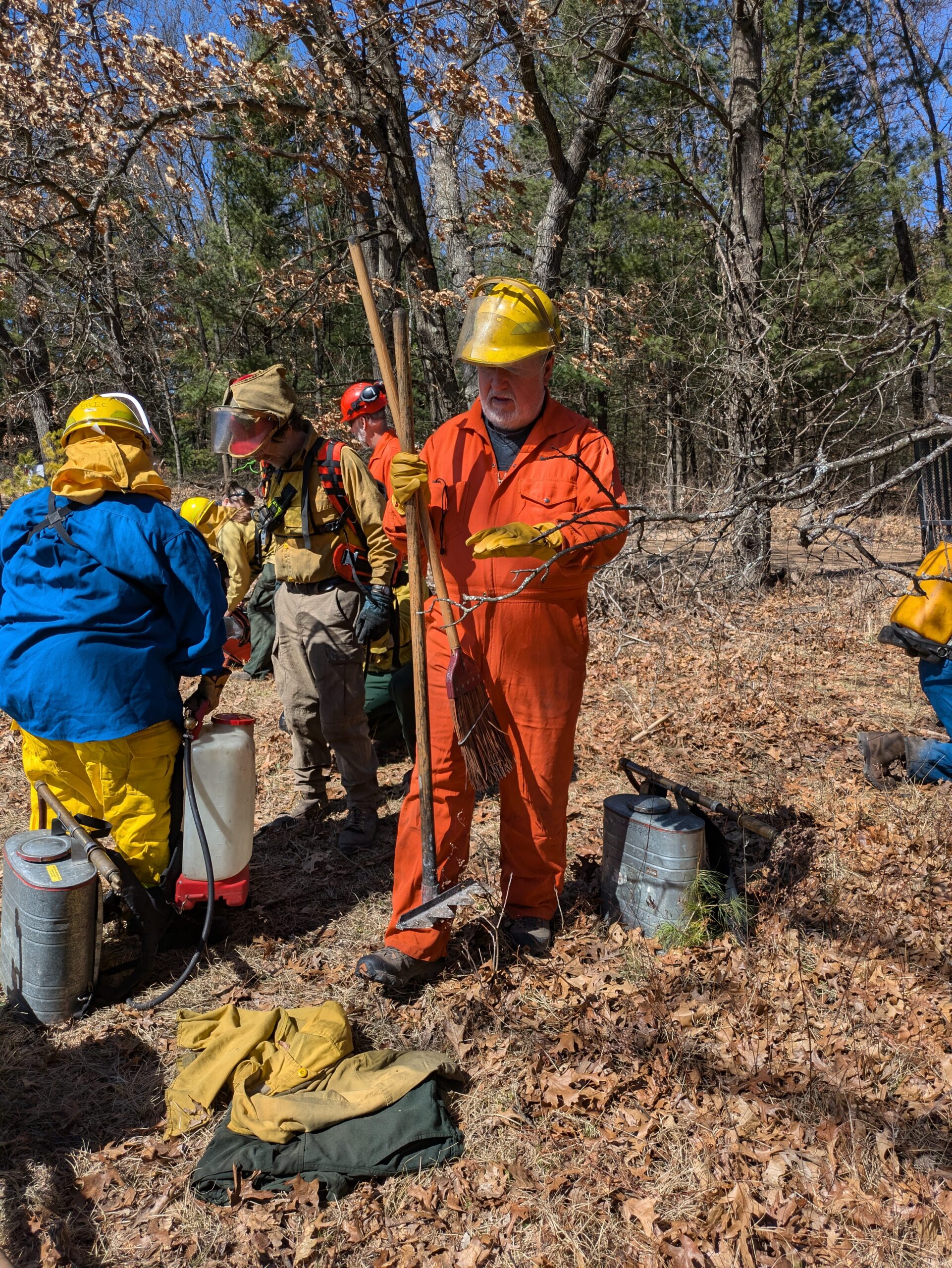
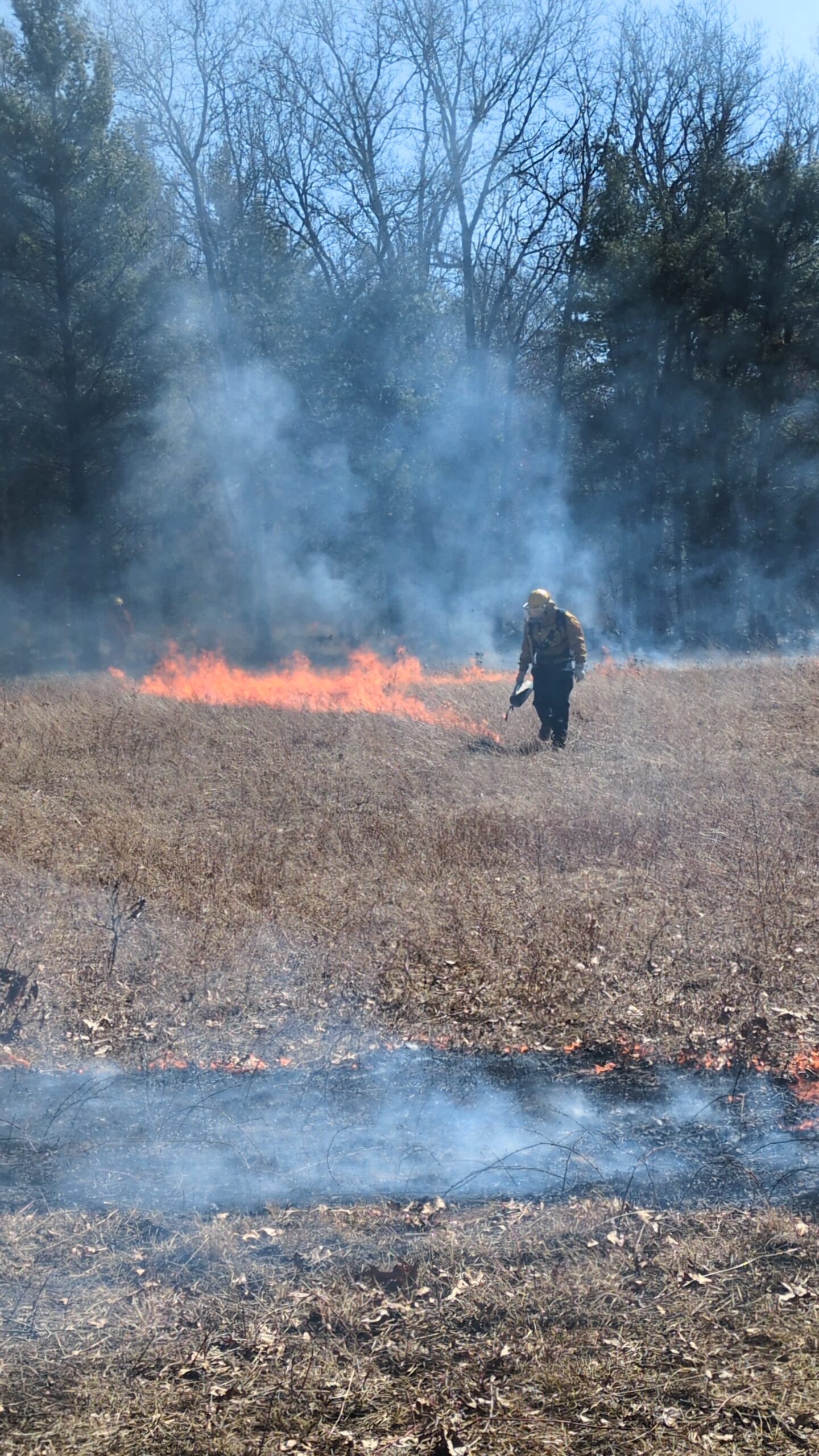
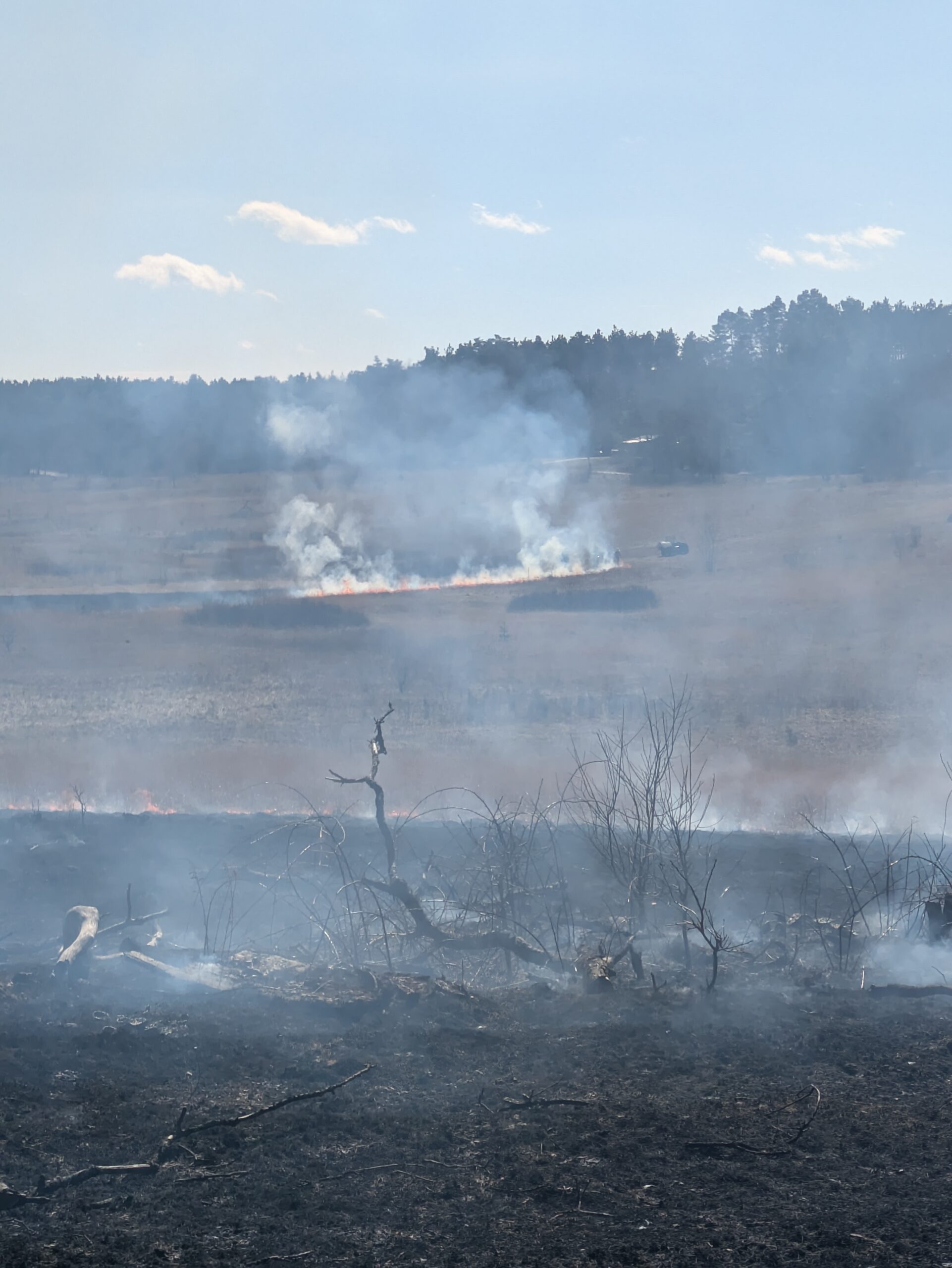
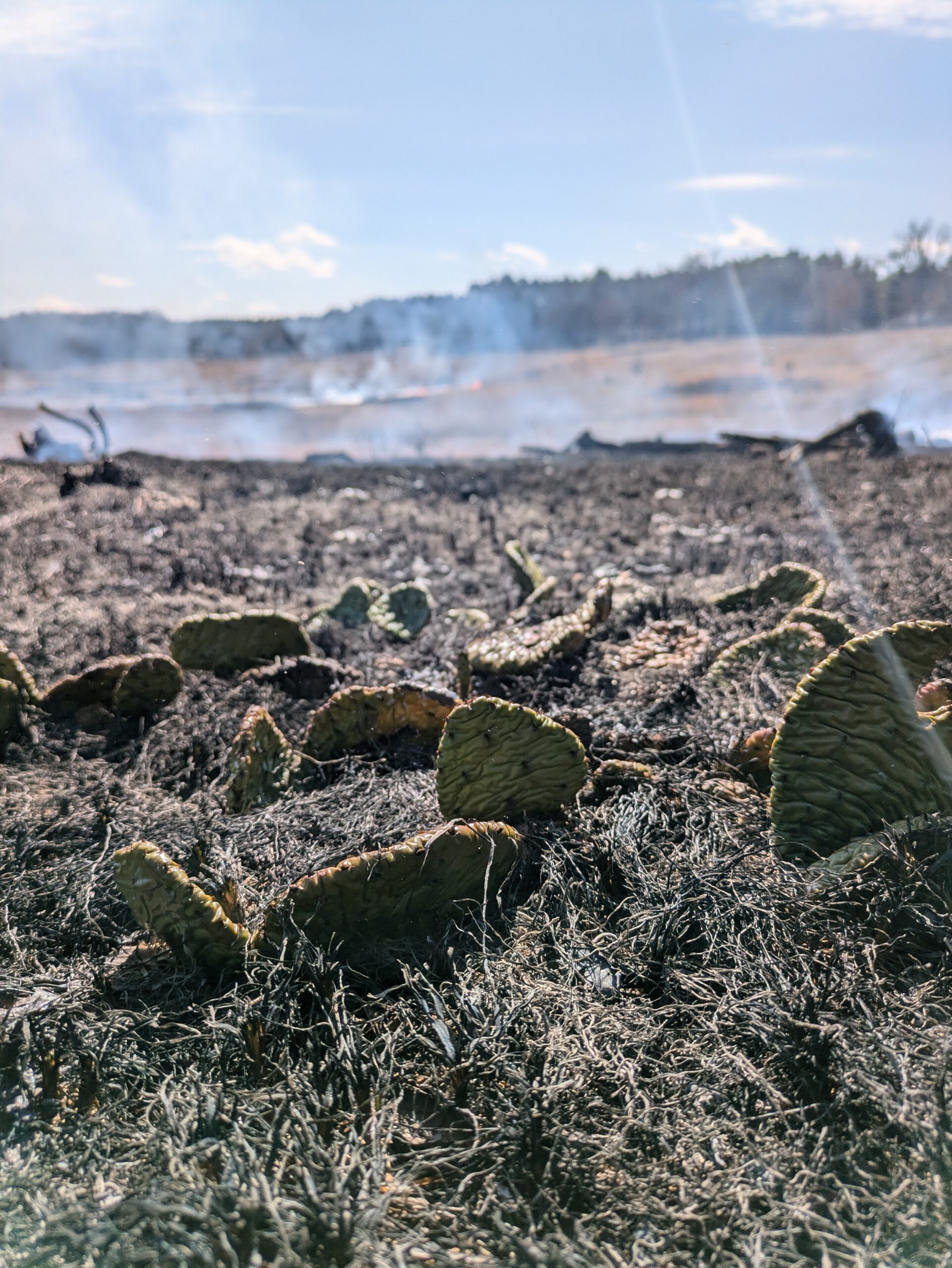
Our assignments were then passed out. I was to “hold”, which meant I’d be wearing a 40 lb Indian branded water pack and I would help contain the fire from escaping over the line we lit with a drip torch. The next step was our safety meeting briefing where the tone changed. I now understood the serious demeanor I had initially walked in on. The first drip torch was lit and everything was quiet. Soon I could hear the maiden crackles of tall grass snapping and being eaten by the flames. A swiping motion was used to draw a line along the perimeter of the burn unit while they advanced. I stayed positioned with my water pack, domesticating the flames while I walked behind them at a distance. The smell and smoke was exhilarating but the most surprising part of all of this was the sound. A good wind caused roars over calculated radio communications. We walked the perimeter of the 9 acre parcel and mirrored the team on the other side as we started the flanking fire and continued on until we lit our head fire. My team met up with our other half, knowing things had gone well as evidenced with the smiles and energy and communications. It felt like a finale to a quick and heated chapter in the long ongoing novella of this prairie’s life. With one brief ‘firenado’, the burn was completed and the black was covering 100% of what we wanted it to cover. The burn was finished and my new passion and respect for fire began. I can’t wait to work on the next one.  

Images and video courtesy of JoAnn Barrett and Rowan Kosnik

Connected Resources:

Leave a Reply

Your email address will not be published. Required fields are marked *

Get In touch

Birds eye view of green forest meeting blue lake background. White NCEC logo and font.

(231) 519-3419

Address: 490 Quarterline St, Newaygo, MI 49337

Email buzz@nc-ec.org

More Posts:

Have a Fire-Safe Summer

“But surely a few logs of my firewood from home won’t hurt anything if I take them camping with me!!! I don’t want to buy firewood when I already have a bunch!”

It’s easy to overlook the creatures we don’t see very often. But lots of little critters feed on and live in dead wood and not just rotting wood, even dry firewood! The culprits of deadly Oak Wilt, the Emerald Ash Borer, and the invasive Asian Longhorned Beetle are just some of the critters known to hitch a ride on firewood.

Read More »

Plant THIS Not THAT

Spring is the time when we rethink our whole existing gardens. The more we understand how much wildlife, including our essential pollinators, struggle with traditional constrained lawn and manicured gardens full of exotic plants, the more we might be motivated to change things up a bit!

Read More »

Planting for Pollinators: A Conversation with Sarah Pregitzer

In preparation for the upcoming growing season, we interviewed NCEC board chair and Master Naturalist Sarah Pregitzer, who has a wealth of knowledge to offer about the role of pollinators in our ecosystem as well as easy ways to get started with planting for pollinators in your yard or in the community.

Read More »