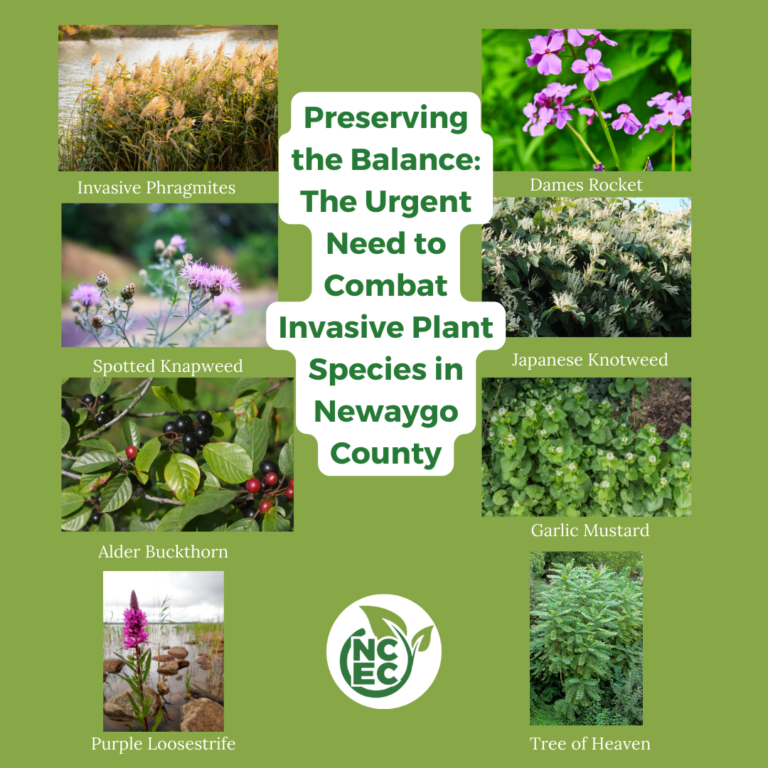
Newaygo County boasts diverse natural habitats, including forests, wetlands, and prairies. However, like many regions worldwide, it is also facing the challenge of invasive plant species. These non-native plants can quickly spread and outcompete native vegetation, leading to a decline in biodiversity and the overall health of our ecosystems. The NCEC would like to inform our fellow landowners about some of the invasive plant species found in Newaygo County and discuss why managing them through removal is crucial for maintaining healthy habitats.
The Audubon Society states, “Invasive species are those, whether non-native from another continent or even “native” to North America but from another part of the continent or ecosystem, that disrupt the viability of native plants in an area.”
While there are differning views on the time line for what constitutes as invasive plant vs a native plant, what tends to be a bigger discussion is what do we call these plants. Invasive plants tends to be the most used name for plants not historically found growing in an area (from another country or even from another climate). Some call these plants non-native. Biologist, author, and native plant proponent Douglas W. Tallamy discusses the debate in his book NATURE’S BEST HOPE: A New Approach to Conservation in Your Yard. He decides to use the term introduced plants vs native plants. *Read our review of this book here: BRINGING NATURE HOME: CREATING HOMEGROWN NATIONAL PARK
Click the included downloadable PDFs for detailed information on identification, growth process, and best removal techniques.
1. Autumn Olive (Elaeagnus umbellata):
Autumn olive, with its silvery leaves and red berries, may seem charming at first glance. However, this invasive shrub can quickly invade open areas, displacing native plants and altering the ecological balance. Its removal is essential to prevent further spread and restore native plant communities. However, autumn olive can be more difficult to control than many invasive shrubs and is almost impossible to eradicate from a region once it has become well-established. A primary goal in controlling this species is to prevent seed production and dispersal both within the managed site and outside it, as nearby plants provide a seed source for repeated invasion. A variety of techniques, including both mechanical and chemical controls, may be most effective and should be tailored to the specific conditions on the site. Monitoring the site to ensure that cut stumps do not resprout is critical. Monitoring may be required indefinitely where abundant seed sources are present nearby.
2. Japanese Knotweed (Polygonum cuspidatum):
Known for its rapid growth and ability to penetrate through concrete, Japanese knotweed poses a significant threat to Newaygo County’s natural areas. Its dense stands can outcompete native vegetation, leading to a loss of habitat for wildlife. Early detection and removal efforts are crucial to prevent its spread and protect our ecosystems. Mechanical methods alone will not effectively control large Japanese knotweed populations and may worsen them. Control efforts must target knotweed’s massive underground system of rhizomes. This network allows it to spread to new areas even as it is attacked mechanically. Accordingly, chemical treatments are more widely used.
Japanese Knotweed: PDF
3. Garlic Mustard (Alliaria petiolata):
Garlic mustard, a biennial herb, has become a pervasive problem in many parts of Michigan, including Newaygo County. Its ability to outcompete native plants and release chemicals that inhibit the growth of other species makes it a formidable invader. By removing garlic mustard, we can help restore the balance of our native plant communities.
Garlic Mustard: PDF
4. Common Buckthorn (Rhamnus cathartica):
Common buckthorn, an aggressive shrub or small tree, can form dense thickets and shade out native plants. Birds consume its berries, which then spread the seeds, further contributing to its spread. Removing common buckthorn is crucial to protecting the diversity of our forests and restoring native plant populations. A primary goal in controlling this species is to prevent seed production and dispersal. A variety of techniques, including both mechanical and chemical controls, may be most effective and should be tailored to the specific conditions on the site. It is critical to monitor the site to ensure that cut stumps or treated plants do not resprout, and the seed bank is exhausted. Monitoring may be required indefinitely where abundant seed sources are present nearby.
Common Buckthorn: PDF
Biodiversity is essential for a healthy ecosystem. Invasive species alter habitats by outcompeting native plants, reducing biodiversity, and disrupting the delicate balance of ecosystems. Removing invasives can create space for native plants to thrive, supporting a diverse range of wildlife and beneficial insect populations.
Restoring our habitats by removing invasive plants will restore needed diversity. Invasive plants alter habitats, making them less suitable for native species. By removing invasives, we can restore the ecological integrity of our natural areas, providing essential habitats for birds, mammals, and other wildlife. Over 100 million years, pollinators evolved to be able to eat from very specific plants; recently introduced plants are of no use to them, causing the endangerment of all our pollinators.
Healthy habitats provide numerous essential ecosystem services, such as clean air and water, soil stabilization, and carbon sequestration. Invasive species can degrade these services, impacting our ecosystems’ overall health and resilience. Removing invasives helps maintain these vital services.
Like many regions, Newaygo County faces the challenge of invasive plant species. By recognizing the threat posed by these non-native invaders and taking action through removal efforts, we can protect the health and biodiversity of our natural habitats. Collaboration between environmental organizations, local communities, and individuals is crucial in managing invasive species and ensuring a sustainable future for Newaygo County’s ecosystems. Let’s work together to restore the balance and preserve the beauty of our natural areas.