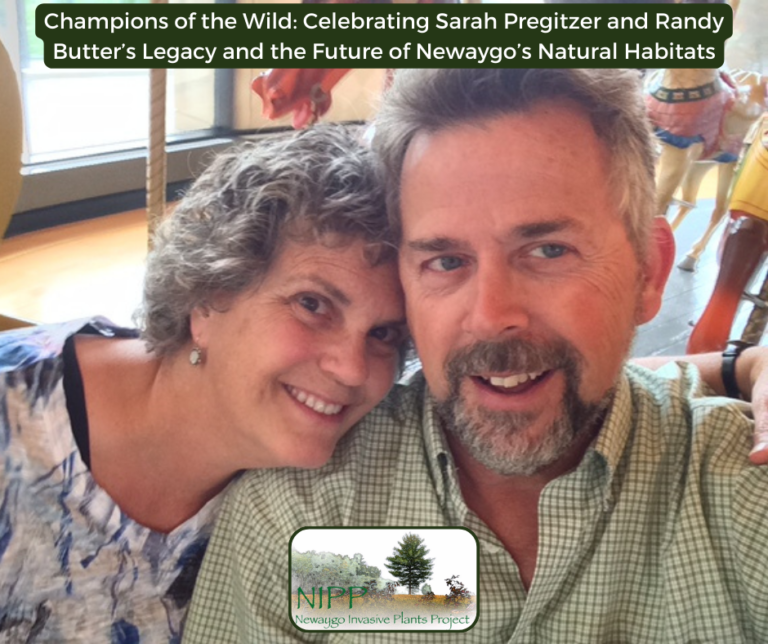
In the heart of Newaygo County, a remarkable story of dedication and environmental stewardship unfolds—a story that deserves to be celebrated and continued. Sarah Pregitzer and husband, Randy Butters, after dedicating years to education and environmental conservation, embarked on a mission that would redefine the natural landscapes of Newaygo County. Their work, through the Newaygo Invasive Plant Project (NIPP), has not only combated the spread of invasive species but has also ignited a community-wide movement toward environmental awareness and action.
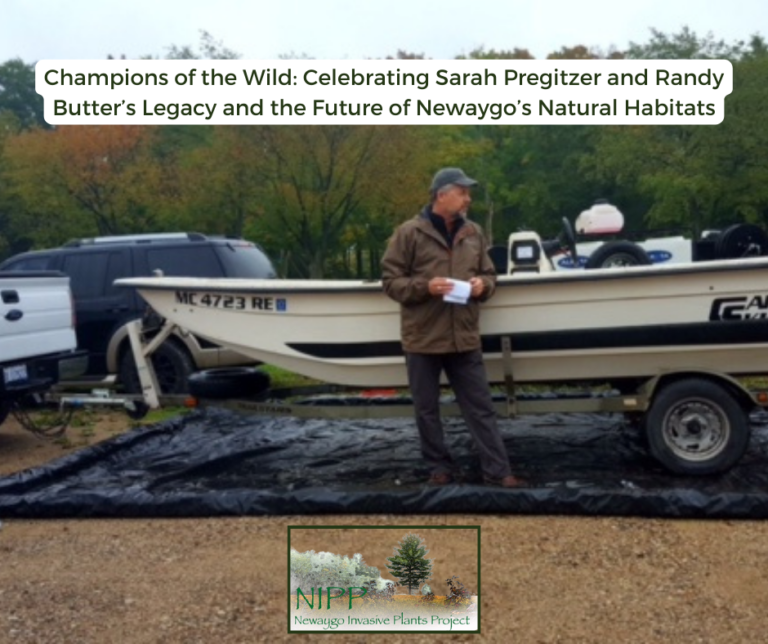
Sarah, a retired middle school science teacher, and Randy, her equally passionate partner, have always been driven by a love for nature and a commitment to preserving it. Their journey into environmental stewardship began with their involvement in The Stewardship Network (TSN), which led them to establish NIPP in partnership with the Land Conservancy of West Michigan. Their efforts were fueled by a grant from the Fremont Foundation, enabling them to host workshops, acquire equipment and supplies, and conduct invasive species removal events. Their main goal has always been to educate the community about the importance of native flora and fauna and the dangers of invasive plants.
Their approach to environmental conservation is deeply rooted in education. Sarah’s background as a teacher allowed her to integrate environmental curriculum into local schools, empowering students to become active stewards of their environment. Through partnerships with the Great Lakes Stewardship Initiative, Sarah helped weave environmental education into the fabric of Newaygo County’s schools, fostering a new generation of environmental advocates.
However, the work is far from done. The vision for a Newaygo County community invasive species strike team is still in the making, and Sarah and Randy, now in their 70s, are seeking to pass the torch to the next generation of environmental stewards. This is where we, as a community, come in. The Newaygo County Environmental Coalition, along with dedicated individuals and landowners, have a unique opportunity to build upon their legacy.
Becoming a member of the invasive species Strike Development Team does not require a background in environmental science—just a willingness to learn and a passion for protecting our natural habitats. With numerous online resources available, anyone can become educated on identifying and managing invasive species. The only missing pieces are community involvement and organization, which is where the Newaygo County Environmental Coalition can help.
We are calling on community members who share a love for Newaygo’s natural beauty to join us in this critical mission. Whether you can offer time, resources, or expertise, your contribution can make a significant difference. By coming together as a community, we can honor the incredible work of these two Newaygo County environmental stewards and ensure that Newaygo County remains a vibrant, biodiverse landscape for generations to come.
Are you ready to help preserve Newaygo County’s natural beauty? Contact us to learn how you can contribute to the Newaygo Invasive Plant Project Strike Team and participate in this vital environmental initiative. Together, we can turn the tide against invasive species and protect our cherished natural habitats.
Sarah and Randy have shown us what is possible when passion meets action. Now, it’s our turn to carry forward their legacy. Join us in this essential endeavor.