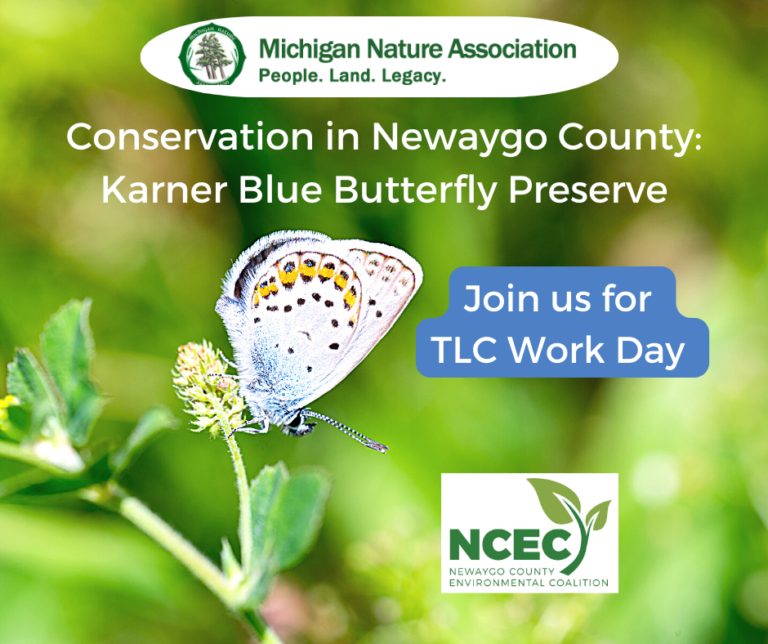
Restoring Land for the Endangered Karner Blue Butterfly in Newaygo County

The Karner Blue Butterfly (KBB), one of Michigan’s rarest species, is facing the threat of extinction. With its survival closely tied to the presence of wild lupine, a native wildflower, the butterfly requires specific habitats like dry-sand prairies and oak-barren ecosystems. The Michigan Nature Association (MNA) has taken a significant step towards conserving this beautiful species by purchasing 40 acres of land for the Brooks Oak-Pine Barrens Nature Sanctuary located in Newaygo County, MI. This initiative is part of a KBB mitigation project aimed at restoring the butterfly’s habitat and ensuring its long-term survival.

The Importance of Habitat Restoration:
Restoring land for the KBB is crucial for its survival. With its larvae relying exclusively on wild lupine as a food source, the butterfly’s existence is intricately linked to the availability of suitable habitats. By creating and maintaining dry-sand prairies and oak-barren ecosystems, we can provide the necessary conditions for wild lupine to thrive, thus supporting the KBB population.

The Role of Newaygo County:
Newaygo County’s acquisition of the Brooks Oak-Pine Barrens Nature Sanctuary is a significant step towards protecting and restoring the KBB habitat. The high-quality habitats present in this area, coupled with the proximity to existing KBB populations, make it an excellent candidate for butterfly restoration efforts. By conserving and managing this land, Newaygo County is contributing to the overall recovery of the species.

Collaboration and Partnerships:
The restoration of land for the KBB requires collaboration and partnerships among various stakeholders. Private citizens, industry, academics, Tribes, local units of government, and state and federal agencies all play a crucial role in the recovery efforts. The Michigan Nature Association has a KBB Preserve in Newaygo County that has an active colony of butterflies, but it needs a lot of restoration work (especially a prescribed burn): 2501 E 72nd St, East of Spruce Ave., Newaygo County, MI 49337.   By working together, we can pool resources, share expertise, and implement effective conservation strategies.

Best Practices for Habitat Restoration:
To ensure the success of habitat restoration, it is essential to follow best practices. These may include:

1. Conducting regular habitat management and restoration activities, such as prescribed burns and invasive species control, to maintain open areas and limit the encroachment of woody vegetation.
2. Creating connecting corridors of wild lupine and nectar plants to facilitate the movement of KBBs to new areas.
3. Monitoring and researching the impacts of climate change on the butterfly and its habitat, and implementing adaptive management strategies accordingly.
4. Engaging local communities and raising awareness about the importance of conserving the KBBs and its habitat.

Looking Towards the Future:
Restoring land for the KBB is not only crucial for the survival of this endangered species but also sets a precedent for the conservation of other at-risk plants and animals. The comprehensive review of climate change impacts on the KBB, along with the proposed recovery actions outlined in the upcoming report, provide hope for species recovery in a changing climate.

By restoring land and creating suitable habitats for the KBB, we can ensure the survival of this rare and beautiful species. Newaygo County’s efforts in acquiring the Brooks Oak-Pine Barrens Nature Sanctuary are a significant step towards this goal. However, the restoration of land requires collective action and collaboration. Let us join hands and work together to protect the KBB and preserve the natural beauty of Newaygo County for future generations.


Connected Resources:

2-3 Days a week, the MNA West Michigan Supervisor and two interns are working at the KBB Preserve. You are ALWAYS welcome. Just contact Stuart Goldman, Conservation Coordinator from the Michigan Nature Association, will lead the workday. He can be contacted at 517-643-6864; email - sgoldman@michigannature.org.

Leave a Reply

Your email address will not be published. Required fields are marked *

Get In touch

Birds eye view of green forest meeting blue lake background. White NCEC logo and font.

(231) 519-3419

Address: 490 Quarterline St, Newaygo, MI 49337

Email buzz@nc-ec.org

More Posts:

Have a Fire-Safe Summer

“But surely a few logs of my firewood from home won’t hurt anything if I take them camping with me!!! I don’t want to buy firewood when I already have a bunch!”

It’s easy to overlook the creatures we don’t see very often. But lots of little critters feed on and live in dead wood and not just rotting wood, even dry firewood! The culprits of deadly Oak Wilt, the Emerald Ash Borer, and the invasive Asian Longhorned Beetle are just some of the critters known to hitch a ride on firewood.

Read More »

Plant THIS Not THAT

Spring is the time when we rethink our whole existing gardens. The more we understand how much wildlife, including our essential pollinators, struggle with traditional constrained lawn and manicured gardens full of exotic plants, the more we might be motivated to change things up a bit!

Read More »

Planting for Pollinators: A Conversation with Sarah Pregitzer

In preparation for the upcoming growing season, we interviewed NCEC board chair and Master Naturalist Sarah Pregitzer, who has a wealth of knowledge to offer about the role of pollinators in our ecosystem as well as easy ways to get started with planting for pollinators in your yard or in the community.

Read More »